


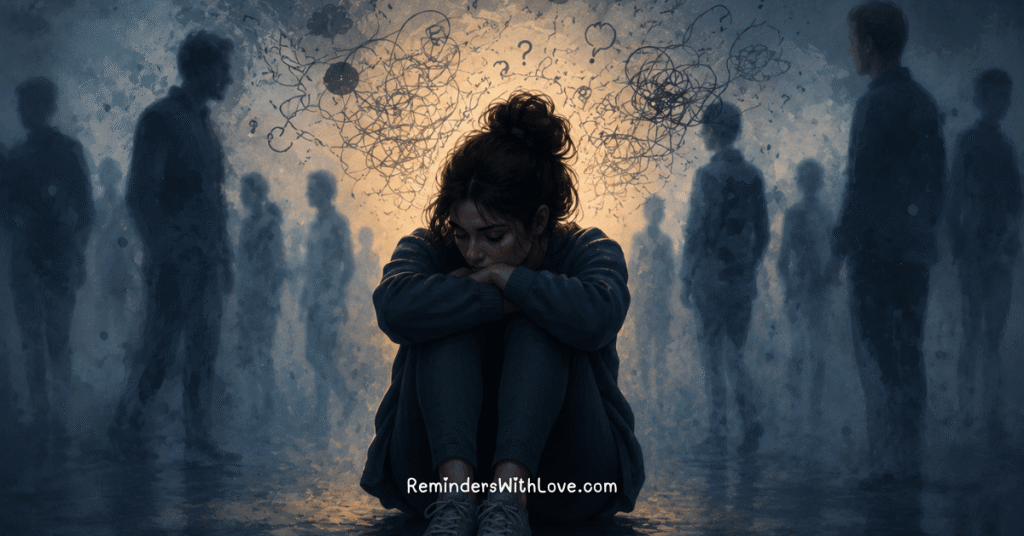
Discover how loneliness affects the human mind, influences thoughts and emotions, and why meaningful connection is essential for psychological wellbeing.
Have you ever noticed how a few days of feeling disconnected can change the way you think about yourself, other people, and the world around you?
Perhaps you started feeling forgotten by friends. Maybe you felt left out of a group, moved to a new city, lost an important relationship, or simply found yourself spending more time alone than usual.
At first, it may have seemed like a temporary feeling.
But over time, something else happened.
Your thoughts changed.
You became more sensitive to rejection.
You started overthinking conversations.
You felt disconnected even when people were around.
You questioned whether anyone truly understood you.
This is one reason loneliness has become such an important topic in psychology, public health, and social work.
Loneliness is often treated as a simple emotion. In reality, it is a powerful psychological experience that can influence how people think, feel, interpret situations, and relate to others.
Understanding what loneliness does to the human mind helps us better understand one of the most important social challenges of modern life.
What Is Loneliness, Really?
Many people assume loneliness means being alone.
However, loneliness and physical solitude are not the same thing.
A person can live alone and feel connected, fulfilled, and supported.
Another person can spend every day around coworkers, family members, classmates, or social media followers and still feel deeply lonely.
Researchers generally define loneliness as the gap between the social connection people want and the connection they actually experience.
In other words, loneliness is less about the number of relationships and more about whether those relationships provide meaningful connection.
This distinction helps explain why loneliness affects people across all age groups and lifestyles.
Why Is the Human Brain So Sensitive to Loneliness?
Human beings evolved in groups.
For thousands of years, survival depended on belonging.
People relied on social groups for:
- Protection
- Food
- Learning
- Cooperation
- Emotional support
As a result, the human brain became highly sensitive to social connection.
Researchers believe loneliness functions as a warning signal.
Just as hunger alerts people to a need for food, loneliness may alert people to a need for connection.
The problem is that the brain often responds to prolonged loneliness as if it is dealing with a significant threat.
This can influence thinking, emotions, and behavior in surprising ways.
Why Does Loneliness Change the Way We Think?
One of the most fascinating findings from loneliness research is that loneliness can alter how people interpret the world around them.
When people feel lonely for extended periods, they may become more alert to social threats.
For example, they may:
- Assume others are judging them
- Expect rejection
- Interpret neutral interactions negatively
- Become more sensitive to criticism
- Overanalyze social situations
Researchers sometimes describe this as a self-protective response.
The brain becomes increasingly focused on identifying potential social risks.
Unfortunately, this heightened vigilance can sometimes make connection more difficult.
A person may withdraw from situations where they fear rejection, even when opportunities for connection are available.
Why Does Loneliness Increase Overthinking?
Many lonely individuals report spending significant time inside their own thoughts.
Without regular opportunities for meaningful social interaction, people often have fewer chances to:
- Share concerns
- Receive feedback
- Gain perspective
- Feel understood
As a result, thoughts can begin circulating repeatedly.
Questions such as:
- “Did I say something wrong?”
- “Why didn’t they reply?”
- “Do people actually like me?”
- “What’s wrong with me?”
may become more common.
Overthinking itself is not unique to loneliness, but loneliness can create conditions where people spend more time analyzing social experiences without receiving reassurance or clarification from others.
Why Can Loneliness Affect Self-Esteem?
Human beings often learn about themselves through relationships.
Supportive relationships help people feel:
- Valued
- Accepted
- Appreciated
- Included
When meaningful connection is lacking, some individuals may begin questioning their social worth.
They may wonder:
- Am I important to anyone?
- Do I matter?
- Why do I feel disconnected?
Over time, loneliness can influence how people view themselves.
This does not mean loneliness automatically causes low self-esteem.
However, prolonged feelings of social disconnection can affect self-perception and confidence.
Why Does Loneliness Make People Feel More Emotionally Sensitive?
Loneliness often increases emotional sensitivity.
When people feel disconnected, emotional experiences may feel more intense.
For example:
- Small rejections may feel larger.
- Minor misunderstandings may feel significant.
- Social disappointments may linger longer.
Researchers believe this may occur because lonely individuals become more focused on social information.
The mind pays greater attention to signs of inclusion, exclusion, acceptance, and rejection.
This heightened awareness can make social experiences feel emotionally amplified.
Can Loneliness Affect How We View Other People?
Yes.
Interestingly, loneliness can influence perceptions of others.
When people feel disconnected for long periods, they may become more cautious in social situations.
They may:
- Trust others less easily
- Expect disappointment
- Assume rejection is likely
- Feel hesitant about new relationships
This creates an unfortunate cycle.
Loneliness increases the desire for connection.
At the same time, loneliness may make people more cautious about pursuing that connection.
Understanding this dynamic helps explain why loneliness can sometimes persist even when opportunities for social interaction exist.
Why Does Loneliness Feel Different From Being Alone?
Solitude and loneliness are often confused, but they are fundamentally different experiences.
Solitude can be:
- Peaceful
- Restorative
- Intentional
- Enjoyable
Many people value time alone for reflection, creativity, and relaxation.
Loneliness, on the other hand, involves an unmet need for connection.
The difference lies in choice and satisfaction.
A person enjoying solitude generally feels connected enough.
A lonely person often feels that something important is missing.
Understanding this distinction is important because it challenges the assumption that loneliness is simply about spending time alone.
Why Is Loneliness Becoming More Common Today?
Researchers point to several contributing factors.
Modern society has experienced significant changes, including:
- Increased mobility
- Remote work
- Smaller households
- Social media use
- Less community participation
- Greater geographic separation from family
Technology has made communication easier.
However, communication does not always create belonging.
Many people interact with others constantly while still lacking deeper forms of connection.
This helps explain why loneliness is increasing despite unprecedented opportunities to communicate.
Why Is Loneliness a Community Issue, Not Just a Personal One?
Social work approaches loneliness differently from many traditional perspectives.
Rather than viewing loneliness solely as an individual experience, social workers often examine broader social factors.
Questions include:
- Are communities creating opportunities for connection?
- Do people feel included?
- Are there barriers to participation?
- Are support networks available?
Loneliness is influenced not only by personal circumstances but also by social environments.
This is why community wellbeing, inclusion, and social support are central themes in social work practice.
Strong communities help people feel connected.
Disconnected communities often increase the risk of loneliness.
What Can Loneliness Teach Us About Human Nature?
Perhaps the most important lesson is that human beings need more than independence and achievement.
They need connection.
They need belonging.
They need meaningful relationships.
Loneliness reminds us that humans are fundamentally social beings.
No amount of success, productivity, or technology completely replaces the need to feel understood, valued, and connected to others.
Far from being a weakness, the desire for connection is one of the defining characteristics of human nature.
Final Thoughts
Loneliness affects far more than emotions.
It influences thoughts, perceptions, self-esteem, social behavior, and overall wellbeing.
When loneliness becomes prolonged, it can change how people see themselves, interpret relationships, and engage with the world around them.
Understanding loneliness helps us recognize that connection is not merely a pleasant part of life.
It is a fundamental human need.
As modern societies continue to change, the challenge is not simply helping people communicate more.
The challenge is helping people feel that they belong.
Because at the heart of loneliness is not the absence of people.
It is the absence of meaningful connection.