


I used to wake up in the middle of the night with a racing heart and no clear reason why.
Everyone said I was fine, but my body kept acting like danger was just around the corner.
It took me years to realize I wasn’t weak, broken, or overreacting—I was stuck in survival mode.
What finally shifted everything wasn’t what I expected at all…
I woke up at 4:11 AM with my jaw clenched and my shoulders locked so tight they hurt.
Not from a nightmare.
From nothing.
My body just decided it was time to panic.
I lay there staring at the ceiling fan, counting its rotations like it could explain what was wrong with me. My chest felt heavy, not painful—just crowded. My hands tingled. My thoughts lined up like witnesses against me.
What if this is the night something finally happens?
What if I ignored the signs again?
What if everyone else was wrong and my body was right?
I reached for my phone. Not to scroll. To check.
Pulse. Symptoms. Old notes. Google searches I’d memorized by heart.
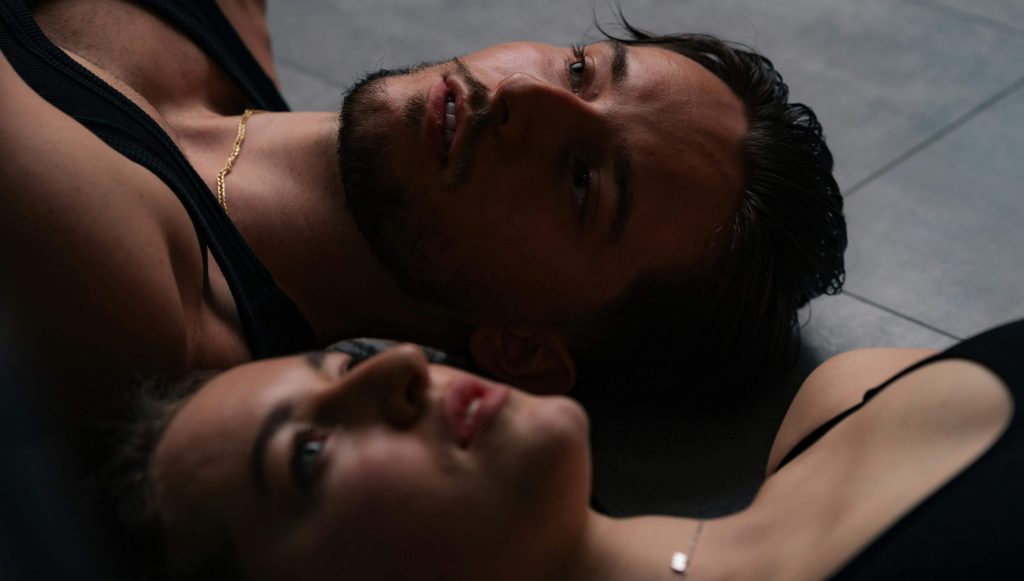
From the other side of the bed, my partner, Aaron, shifted.
“You awake again?” he asked quietly.
“Yeah.”
“Anything specific?”
I shook my head, even though he couldn’t see me. “Just… the feeling.”
He didn’t push. He’d learned not to. When you live with someone like me, you eventually understand that asking why only makes things worse.
Here’s the brutal truth nobody prepares you for:
chronic anxiety doesn’t feel like fear. It feels like vigilance.
It feels like responsibility.
Like you’re the only one paying attention while everyone else is asleep at the wheel.
People told me to relax. To distract myself. To stop overthinking.
But I wasn’t thinking—I was monitoring.
Every sensation became data. Every mood shift meant something. I compared today’s heartbeat to yesterday’s. I replayed conversations, meals, body signals. I didn’t trust calm because calm never lasted.
And once your body learns that pattern, it doesn’t ask permission to continue.
I wasn’t always like this.
Three years ago, I was the friend who stayed late. The one who drove long distances without thinking twice. The one who handled stress by getting things done.
Then one afternoon, stuck in traffic during a heatwave, my car stalled.
Ten minutes. That’s all.
But my body reacted like I was trapped forever.
Heart racing. Dizziness. Tunnel vision. That terrifying sense of I’m not safe with no clear reason why.
The car restarted. Traffic moved. Life went on.
My body didn’t.
After that, it was like the world had invisible tripwires. Elevators. Long meetings. Crowded rooms. Silence. Noise. Happiness, even—because happiness felt like something that could be taken away.
I started canceling plans with believable excuses.
“I’m not feeling great.”
“Maybe next time.”
“Work’s been a lot.”
Eventually, people stopped asking.
Aaron stayed. But I could feel the strain. Not anger—confusion. Helplessness. Watching someone you love fight an enemy you can’t see is exhausting.
“I just want you to be okay,” he said once, voice breaking.
I wanted that too. Desperately.
I tried everything that looked responsible and self-aware.
I learned the language of anxiety.
I journaled.
I meditated until focusing on my breath made me panic more.
I exercised until I convinced myself my heart rate was dangerous.
I talked. And talked. And understood everything intellectually.
But knowledge didn’t change my reactions.
That’s the part people don’t tell you:
insight doesn’t rewire a nervous system.
Understanding why you’re anxious doesn’t stop your body from reacting as if it’s under attack.
The lowest point wasn’t the panic.
It was the isolation.
The quiet shame of thinking, Other people handle life. Why can’t I?
One evening, my mother called. I hadn’t realized how carefully I’d been managing my voice until she said, “You sound tired in a way sleep won’t fix.”
I didn’t argue. I couldn’t.
She didn’t offer solutions. She didn’t minimize it. She just said something that landed harder than advice ever could:
“Your body thinks it’s protecting you. It just doesn’t know when to stop.”
That sentence cracked something open.
Not relief.
Recognition.
For the first time, the problem wasn’t me. It was a system running on outdated information.
I started reading—not about anxiety symptoms, but about how safety is learned.
I learned that the nervous system doesn’t respond to logic.
It responds to experience.
That it doesn’t calm down because you tell it to.
It calms down when it repeatedly feels that nothing bad happens.
Slowly. Quietly. Without drama.
So I stopped trying to fix myself.
I stopped asking, What’s wrong with me?
And started asking, What does my body believe is dangerous right now?
When the tightness came, I didn’t chase it.
I didn’t fight it.
I didn’t analyze it to death.
I noticed it.
Stayed present.
And let it exist without escalating the story.
The first few times, nothing magical happened.
The sensations stayed.
But something else changed.
The panic didn’t multiply.
The thoughts didn’t spiral into catastrophe.
My body didn’t need to scream to be heard.
One night, I realized I’d slept six straight hours.
Another day, I went grocery shopping alone and didn’t rush through the aisles like I was escaping something.
Weeks later, Aaron said, “You’re quieter lately. Not distant—just… steadier.”
That’s when I understood the real lesson:
Healing isn’t about feeling good.
It’s about no longer being afraid of feeling bad.
My body didn’t need constant reassurance.
It needed consistency.
Safety is learned the same way fear is—through repetition.
I still have anxious days. I’m not cured. I’m human.
But I no longer treat every sensation like a prophecy.
I don’t interrogate my body for evidence of failure.
I don’t live as if peace is something that must be earned.
Here’s the ruthless truth I wish someone had told me earlier:
- You are not broken.
- You are not weak.
- You are not failing at healing.
You are living with a nervous system that learned survival too well.
And the moment you stop treating it like an enemy—and start treating it like a guard that never got the “all clear” signal—everything changes.
If you’re reading this late at night, body tense, mind racing…
If you keep thinking something is wrong even when no one can find proof…
If you’re exhausted from being alert all the time…
Listen carefully:
Your body isn’t predicting disaster.
It’s remembering one.
And memories can be updated.
Not through force.
Not through shame.
But through patience, presence, and repeated safety.
That’s how you come back to yourself.
Slowly.
Quietly.
For real.