
He Asked One Question on the Wedding Night—and It Destroyed Everything
On her wedding night, he didn’t ask if she was happy… he asked, “Why can’t you prove you were a virgin?” And in that moment, everything she believed about love, respect, and marriage began to fall apart.
I grew up in a quiet suburb outside Chicago, raised by parents who believed in discipline, safety, and doing things the right way. I wasn’t the kind of girl who dated around or had a dramatic love life. My dad used to drop me off and pick me up even during my college prep days. Some people thought it was strict, but to me, it felt like love. I was their only child, and they protected me in every way they could.
After college, I landed a stable job at a bank downtown. I had my own income, my own routine, and a peaceful life. Around 24, my parents gently started bringing up marriage. That’s when Daniel came into my life.
Daniel was a financial analyst working in a respected firm. He was calm, educated, and seemed incredibly respectful. His family had been living in the U.S. for years, but his grandparents had immigrated from India, and some of their traditional beliefs still quietly shaped how they saw the world—especially when it came to marriage, purity, and family honor.
At first, none of that felt like a problem.
“He’s a good guy,” my mom said after meeting him.
“He’s stable. That matters,” my dad added.
Daniel treated me kindly. He was patient, attentive, and made me feel chosen. I didn’t have a dramatic love story before him, so I trusted what I felt. Slowly, I said yes—not just to him, but to the life we were building.
Before the wedding, we started spending more time together. Sometimes we went out for movies, sometimes just quiet dinners. A few times, we crossed lines I had once promised myself I wouldn’t—but I believed we were already committed to each other. We were going to get married anyway. It felt like love, not a mistake.
Our wedding was beautiful. Everything felt right. Surrounded by family, lights, and celebration, I truly believed I was stepping into a safe, loving future.
But that illusion didn’t last long.
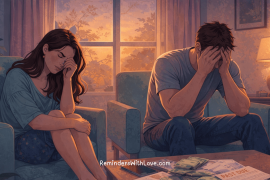
On our honeymoon night, something shifted.
There was tension in his silence. A distance I couldn’t explain. And then, suddenly, he said it.
“You lied to me.”
I froze. “What do you mean?”
“You’re not… what I expected,” he said, struggling to even say the word. “You should have been able to prove it.”
It took me a moment to understand what he was implying.
“You’re seriously talking about this?” I asked, my voice shaking. “We’re married. We love each other. Why does that even matter?”
“It matters to me,” he said coldly. “It matters to my family.”
In that moment, I wasn’t his wife. I was being judged. Measured. Reduced to something so small and outdated that I couldn’t even believe it was happening—in modern America, in my own marriage.
Anger rose inside me.
“If that’s what you think of me,” I said, standing up, “then maybe you shouldn’t have married me.”
For a second, I thought I would walk out that very night.
But he softened. He apologized. He spoke calmly, like a reasonable man again. He told me he was just confused, influenced by things he grew up hearing, and that he didn’t mean to hurt me. I wanted to believe him.
So I stayed.
After the wedding, we moved into his family home in New Jersey. At first, everything felt normal. Quiet. Manageable.
But slowly, things began to change.
His mother made it very clear that her son still “belonged” to her. I tried to stay respectful, calm, and patient. I avoided arguments. I adjusted. I told myself this was just part of marriage.
When I became pregnant, I thought things would finally get better.
I was wrong.
Instead of care, I faced criticism. Instead of support, I faced pressure.
“You’re just lying around all day?” his mother snapped one morning as I struggled with nausea. “When I was pregnant, I did everything myself.”
“I’m not feeling well,” I said quietly.
“That’s normal. Stop acting weak.”
Daniel stood there… and said nothing.
Later, when I tried to explain how I felt, he brushed it off.
“Mom’s right,” he said. “Women go through this all the time.”
That hurt more than anything.
Things got worse after the baby was born.
I was exhausted, healing, overwhelmed—and still expected to function like nothing had changed. His mother criticized everything I did. Sometimes she wouldn’t even help with the baby, but she always had something to say.
One night, when I finally spoke back, everything exploded.
Daniel walked in, furious.
“Don’t talk to my mother like that!” he shouted.
“I’m not your enemy,” I cried. “I just need support!”
But instead of listening… he hit me.
Over and over again.
“You fooled me!” he yelled. “You lied to me from the beginning!”
His mother stood there, not stopping him—almost proud.
That was the moment something inside me broke completely.
That night, I grabbed my baby and walked out.
No bags. No plan. Just fear.
I thought, If I stay here, I might not survive this.
On the street, shaking and injured, a woman stopped her car.
“Hey… are you okay?” she asked gently.
I couldn’t even speak properly.
She turned out to be a lawyer, driving home after work. She took me straight to the hospital, helped me file a report, and made sure everything was documented. For the first time that day… I felt safe.
The next morning, my parents arrived.
My father looked at Daniel and said,
“You hit the mother of your child? What kind of man does that?”
Even the police officer shook his head in disbelief.
Daniel stood there, silent. Regretful. But it was too late.
People told me to forgive him.
“For the child,” they said.
“Don’t ruin your life,” they said.
And for a moment… I almost believed them.
But then I remembered everything—the accusations, the silence, the pain, the fear.
And I realized something important.
Love should never feel like humiliation.
Marriage should never feel like survival.
So I made a choice.
I chose myself.
What can we learn from a story like this? Sometimes the biggest red flags aren’t loud—they’re quiet beliefs that hide behind “culture,” “family values,” or “tradition.” Respect, trust, and safety are not optional in any relationship, no matter where someone comes from or how they were raised. Love is not proven through control, judgment, or endurance of pain—it’s shown through understanding, support, and emotional safety. And most importantly, no one should ever feel pressured to stay in a situation that harms them just to “save” a marriage or protect appearances. Walking away isn’t failure—it’s strength.