
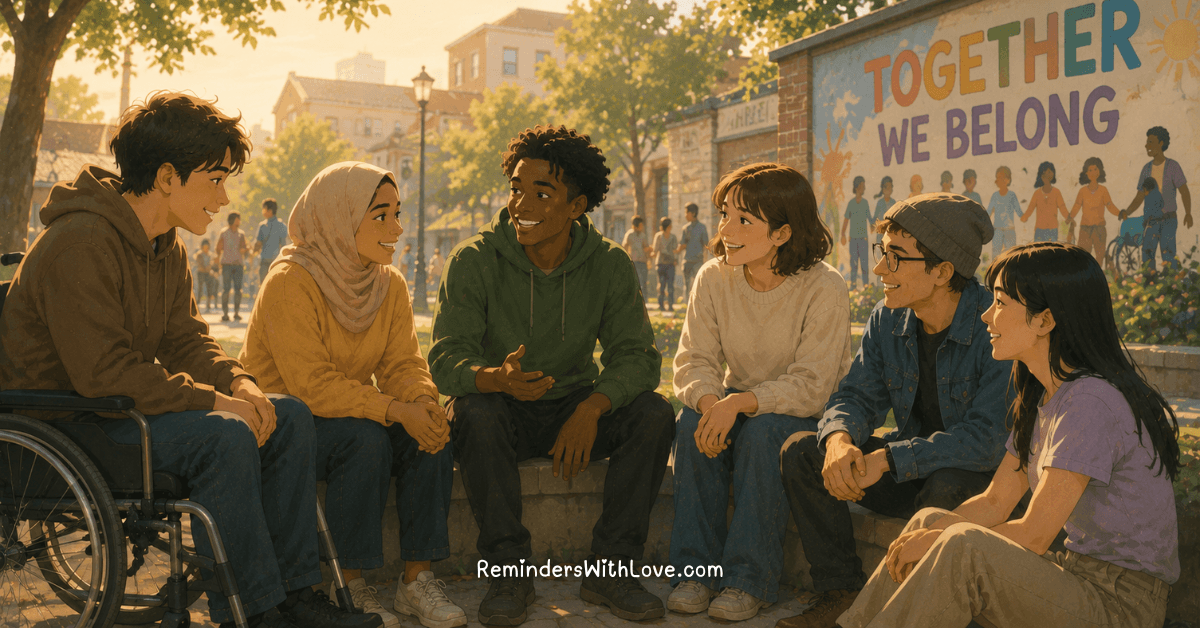
Discover what social inclusion means, why it matters for wellbeing and community life, and how belonging, respect, and participation help people thrive.
Have you ever been invited into a room but still felt like you didn’t truly belong there?
Perhaps you were included physically but not socially. Maybe people acknowledged your presence, but your voice was rarely heard. Or perhaps you felt different from everyone around you and wondered whether you really fit in.
Experiences like these help explain why social inclusion has become an increasingly important topic in psychology, social work, education, public health, and community development.
Most people understand the importance of being included. However, social inclusion is about much more than simply allowing people to be present.
True inclusion is about participation.
It is about belonging.
It is about creating environments where people feel valued, respected, welcomed, and able to contribute.
Understanding social inclusion helps us better understand human wellbeing, healthy communities, and the social factors that influence people’s quality of life.
What Is Social Inclusion?
Social inclusion refers to the process of ensuring that people have opportunities to participate fully in society, regardless of their background, circumstances, or personal characteristics.
Inclusion means more than physical presence.
A person may technically be included in a group while still feeling isolated or ignored.
True inclusion occurs when people:
- Feel welcomed
- Feel respected
- Feel heard
- Feel valued
- Have opportunities to participate
- Have access to resources and opportunities
Inclusion is ultimately about creating environments where people can contribute, connect, and belong.
Why Do Humans Need Inclusion?
Human beings are social creatures.
Throughout history, people survived through cooperation and community.
Belonging to a group often meant:
- Safety
- Support
- Shared resources
- Learning opportunities
- Social connection
As a result, the need for belonging became deeply rooted in human psychology.
Researchers consistently identify belonging as one of the most important human needs.
People want to know:
- Where they fit in
- Whether they matter
- Whether they are accepted
- Whether they are valued
Social inclusion helps meet these needs by creating opportunities for connection and participation.
What Is the Difference Between Inclusion and Belonging?
The terms are closely related, but they are not identical.
Inclusion generally refers to being welcomed and able to participate.
Belonging refers to the emotional experience of feeling accepted and valued.
Think of it this way:
A person may be invited to join a group.
That is inclusion.
But whether they feel accepted, respected, and connected within that group determines whether they experience belonging.
Healthy communities strive to create both.
People need opportunities to participate, but they also need environments where they genuinely feel they belong.
Why Does Social Inclusion Matter for Wellbeing?
Research consistently shows that social relationships influence wellbeing.
People who feel included often experience:
- Greater life satisfaction
- Higher self-esteem
- Stronger social connections
- Increased participation
- Greater community engagement
Inclusion helps people feel that they matter.
It reinforces the idea that they are valued members of their communities.
Conversely, exclusion can contribute to feelings of:
- Isolation
- Disconnection
- Loneliness
- Reduced confidence
This is one reason social inclusion is increasingly viewed as an important wellbeing issue.
What Happens When People Feel Excluded?
Most people have experienced exclusion at some point.
Examples include:
- Being ignored
- Being left out
- Feeling different
- Feeling unwelcome
- Being unable to participate fully
Even seemingly small experiences of exclusion can affect how people feel.
Researchers have found that social exclusion can influence:
- Emotional wellbeing
- Confidence
- Sense of identity
- Community participation
When exclusion becomes persistent, people may begin withdrawing from social opportunities altogether.
This is why creating inclusive environments is so important.
Inclusion helps prevent unnecessary barriers to participation and connection.
Why Is Diversity Important to Social Inclusion?
Diversity and inclusion are often discussed together because they address different aspects of community life.
Diversity refers to differences among people.
These differences may include:
- Age
- Culture
- Language
- Ability
- Life experiences
- Backgrounds
- Perspectives
Inclusion focuses on how communities respond to those differences.
A diverse community is not automatically inclusive.
People may be present yet still feel marginalized or excluded.
Inclusion requires creating environments where differences are respected and where everyone has opportunities to participate meaningfully.
Why Does Respecting Differences Matter?
Every person brings unique experiences, perspectives, and strengths.
Communities benefit when those differences are acknowledged and respected.
Respecting differences does not require people to agree on everything.
Instead, it involves recognizing that diversity is a normal and valuable part of human society.
Respect can be demonstrated through:
- Listening
- Openness
- Fair treatment
- Accessibility
- Inclusion in decision-making
Communities become stronger when people feel that their perspectives and experiences are valued.
Who Is Most Affected by Social Exclusion?
While anyone can experience exclusion, some groups may face additional barriers to participation.
Examples include:
- Individuals with disabilities
- Older adults
- Refugees and newcomers
- People experiencing poverty
- Minority groups
- People facing discrimination
These barriers may affect access to:
- Education
- Employment
- Community participation
- Social opportunities
- Resources
Social inclusion seeks to reduce these barriers and create opportunities for meaningful participation.
This perspective is central to many social work and community development efforts.
Why Is Social Inclusion Important for Communities?
Inclusion benefits more than individuals.
It also strengthens communities.
Inclusive communities often experience:
- Greater trust
- Stronger relationships
- Increased participation
- Better cooperation
- Greater social cohesion
When people feel included, they are more likely to contribute their ideas, skills, and experiences.
Communities thrive when everyone has opportunities to participate and feel valued.
This is why inclusion is often considered a key component of community wellbeing.
How Does Social Inclusion Support Community Wellbeing?
Community wellbeing depends on more than infrastructure, services, or economic development.
It also depends on relationships.
People are more likely to engage with their communities when they feel:
- Welcome
- Safe
- Respected
- Included
Inclusion creates opportunities for people to connect with one another and participate in community life.
These connections help strengthen social support networks and foster a greater sense of belonging.
As a result, inclusion contributes to healthier and more resilient communities.
Why Is Social Inclusion a Social Work Issue?
Social work focuses on the relationship between individuals and their environments.
The profession recognizes that wellbeing is influenced not only by personal circumstances but also by social conditions.
Social workers often ask questions such as:
- Who is being left out?
- What barriers exist?
- How can participation be increased?
- How can communities become more inclusive?
This perspective emphasizes that social inclusion is not simply a personal experience.
It is also a community and societal issue.
Creating inclusive environments helps people access opportunities, build relationships, and participate fully in community life.
What Can Social Inclusion Teach Us About Human Nature?
Perhaps the most important lesson is that people want more than acceptance.
They want participation.
They want connection.
They want belonging.
Human beings naturally seek environments where they feel valued and respected.
Social inclusion reflects the understanding that every person deserves opportunities to contribute and be part of community life.
When people feel included, they are more likely to engage, connect, and thrive.
Final Thoughts
Social inclusion is about far more than allowing people to be present.
It is about creating environments where people feel welcomed, respected, valued, and able to participate fully.
It recognizes that belonging is a fundamental human need and that healthy communities depend on inclusion.
By promoting participation, respecting differences, and reducing barriers, communities become stronger and more connected.
Perhaps this is why social inclusion matters so much.
Because when people feel they truly belong, both individuals and communities have a greater opportunity to flourish.