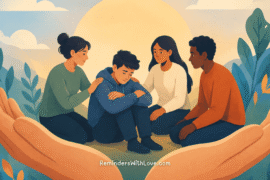

Why do people help others? Discover the psychology behind kindness, empathy, generosity, and the role they play in human wellbeing and community life.
Have you ever witnessed a stranger helping another stranger and found yourself unexpectedly moved by it?
Maybe someone paid for a person’s meal, helped an elderly neighbor carry groceries, comforted someone who was upset, or simply offered a smile during a difficult day.
These moments often seem small.
Yet they can leave a surprisingly powerful impression.
Why do acts of kindness affect us so deeply?
Why do people help others, even when there is no obvious reward?
And why do simple acts of generosity sometimes inspire more kindness in return?
These questions have fascinated psychologists, sociologists, philosophers, and social workers for decades. While kindness is often viewed as a moral virtue, research increasingly shows that it is also an important aspect of human psychology and social life.
Understanding the psychology behind kindness helps us better understand human behavior, relationships, communities, and the factors that contribute to wellbeing.
What Is Kindness?
Kindness generally refers to actions intended to benefit another person.
These actions can be large or small.
Examples include:
- Offering emotional support
- Helping someone solve a problem
- Sharing resources
- Volunteering time
- Showing compassion
- Providing encouragement
- Performing everyday acts of generosity
Kindness does not always require significant effort or resources.
Often, it appears in ordinary interactions between people.
A brief conversation, a thoughtful gesture, or a moment of understanding can all be expressions of kindness.
At its core, kindness reflects concern for the wellbeing of others.
Why Are Humans Capable of Kindness?
One common misconception is that human behavior is driven entirely by self-interest.
However, research suggests that cooperation and helping behaviors have always been important parts of human societies.
Throughout history, people survived by working together.
Communities depended on:
- Cooperation
- Mutual assistance
- Resource sharing
- Protection
- Caregiving
Helping others often benefited the group as a whole.
As a result, humans evolved within social environments where cooperation played a crucial role.
Psychologists increasingly recognize that people possess natural capacities for empathy, compassion, and prosocial behavior.
Kindness is not unusual.
It is one of the characteristics that has helped human societies function and thrive.
What Role Does Empathy Play in Kindness?
Empathy is often considered one of the foundations of kindness.
Empathy refers to the ability to recognize and understand another person’s emotions or experiences.
When people notice that someone is struggling, distressed, or in need of support, empathy may increase their motivation to help.
For example, if someone sees:
- A person who appears upset
- A neighbor facing difficulties
- A friend experiencing loss
they may feel concerned and want to respond.
Empathy helps people move beyond their own immediate perspective and consider the experiences of others.
This ability plays an important role in many helping behaviors.
Why Does Helping Others Sometimes Feel Good?
Many people notice that helping others often creates positive feelings.
Researchers have explored this phenomenon extensively.
Several factors may contribute.
Helping others can create:
- A sense of purpose
- Feelings of connection
- Greater social belonging
- A sense of contribution
- Increased meaning
People often feel satisfied when they know their actions have positively affected another person.
Importantly, this does not mean kindness is selfish.
Rather, it highlights the fact that human wellbeing is closely connected to relationships and contribution.
People frequently experience fulfillment when they contribute to the wellbeing of others.
Why Are Acts of Kindness Contagious?
Have you ever noticed that witnessing kindness often inspires people to behave kindly themselves?
Researchers sometimes refer to this as social contagion.
When individuals observe helping behaviors, they may become more likely to:
- Help others
- Cooperate
- Show generosity
- Engage positively with their communities
Kindness often spreads through social networks.
One person’s action may influence another person, who then influences someone else.
This ripple effect helps explain why seemingly small acts of kindness can have broader social impacts.
Communities benefit when kindness becomes part of everyday interactions.
Why Does Kindness Strengthen Relationships?
Relationships depend on trust, respect, and mutual support.
Acts of kindness contribute to all three.
Kindness communicates important messages such as:
- “I care about you.”
- “You matter.”
- “I am willing to support you.”
These messages strengthen social bonds.
Whether within families, friendships, workplaces, or communities, kindness helps build and maintain relationships.
Over time, repeated acts of kindness contribute to stronger social connections and greater feelings of belonging.
Can Kindness Improve Community Wellbeing?
Kindness is often viewed as an individual behavior.
However, its effects extend far beyond individual interactions.
Communities characterized by kindness often demonstrate:
- Greater trust
- Stronger social networks
- Increased cooperation
- Higher levels of participation
- Stronger social cohesion
People are more likely to engage in community life when they feel respected and supported.
This is one reason community wellbeing is closely linked to everyday acts of kindness and consideration.
Social environments where kindness is common often become more welcoming and inclusive.
Why Do Some People Help Strangers?
One of the most fascinating aspects of kindness is that people often help individuals they do not know.
Examples include:
- Donating to charitable causes
- Volunteering
- Helping strangers during emergencies
- Supporting community initiatives
Why would someone invest time or energy in helping a person they may never meet again?
Researchers suggest several factors may contribute:
- Empathy
- Shared humanity
- Moral values
- Social responsibility
- Community identity
Many people recognize that they are part of something larger than themselves.
This broader perspective can motivate acts of generosity and service.
Is Kindness Different From Volunteering?
Kindness and volunteering overlap, but they are not identical.
Kindness often refers to individual actions that benefit others.
Volunteering typically involves organized efforts to contribute time or skills to a cause or community.
Both play important roles in society.
Both strengthen social connection.
Both contribute to community wellbeing.
Both demonstrate the human capacity for cooperation and care.
From a social work perspective, volunteering and kindness are valuable because they help strengthen communities and support collective wellbeing.
Why Is Kindness Important in Social Work?
Social work is built upon principles that include:
- Human dignity
- Social justice
- Respect
- Compassion
- Community support
Kindness alone is not sufficient to solve complex social issues.
However, kindness often creates the foundation upon which supportive relationships and community engagement can grow.
Social workers frequently encounter situations where empathy, understanding, and respect play essential roles.
Acts of kindness can help create environments where people feel valued and supported.
This is one reason kindness remains relevant within discussions about wellbeing and community development.
What Can Kindness Teach Us About Human Nature?
Perhaps the most important lesson is that people are more interconnected than they sometimes realize.
Modern culture often emphasizes competition, achievement, and independence.
Yet research consistently shows that relationships, cooperation, and contribution remain central to human wellbeing.
Kindness reminds us that people are capable of caring about one another.
It demonstrates that human behavior is not driven solely by personal gain.
Acts of kindness reveal the social nature of humanity and the importance of connection.
Why Might Kindness Matter More Than Ever Today?
Many societies are experiencing increasing levels of loneliness, social isolation, and disconnection.
People often report feeling:
- Lonely
- Overwhelmed
- Disconnected
- Unsupported
In this context, everyday kindness becomes particularly significant.
Small gestures of support can strengthen social bonds and reinforce a sense of community.
While kindness cannot solve every problem, it contributes to environments where people feel more connected and valued.
That contribution matters.
Final Thoughts
The psychology behind acts of kindness reveals something important about human nature.
People are not only capable of caring for one another—they often benefit from doing so.
Kindness strengthens relationships, supports communities, fosters belonging, and contributes to wellbeing.
Whether expressed through volunteering, generosity, empathy, or everyday acts of consideration, kindness helps create stronger social connections.
Perhaps this is why acts of kindness affect us so deeply.
They remind us that human beings are connected.
And when people support one another, communities become stronger, relationships become richer, and life becomes a little more meaningful for everyone involved.