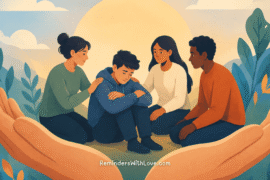

Discover why giving back helps people find meaning, purpose, belonging, and connection, and why contributing to others benefits both individuals and communities.
Have you ever achieved a goal you worked hard for, only to find yourself wondering, “Is this all there is?”
Many people spend years pursuing success, financial stability, education, career advancement, or personal achievements. While these accomplishments can be important and rewarding, they do not always provide the lasting sense of fulfillment people expect.
At some point, many individuals begin asking deeper questions:
- What gives life meaning?
- How do I make a difference?
- What purpose do I serve beyond myself?
Interestingly, researchers across psychology, sociology, human development, and social work have found that one of the most powerful sources of purpose often comes from contributing to others.
Whether through volunteering, mentoring, community involvement, charitable work, or everyday acts of kindness, giving back frequently creates a sense of meaning that extends beyond personal achievement.
Why does this happen?
Why can helping others sometimes feel more fulfilling than receiving recognition ourselves?
Understanding the connection between giving back and purpose offers valuable insights into human wellbeing, community life, and the social nature of human beings.
What Does It Mean to Give Back?
Giving back generally refers to contributing time, energy, skills, resources, or support for the benefit of others or the wider community.
Giving back can take many forms, including:
- Volunteering
- Mentoring
- Community service
- Supporting charitable causes
- Helping neighbors
- Sharing knowledge
- Supporting vulnerable groups
- Participating in local initiatives
Importantly, giving back is not limited to large-scale efforts.
Small contributions often matter just as much.
Simple acts of kindness, support, and service can have meaningful impacts on both individuals and communities.
At its core, giving back involves contributing to something larger than oneself.
Why Do Humans Search for Purpose?
Purpose is one of the most frequently discussed topics in human development research.
People generally want more than survival.
They want meaning.
They want to feel that their lives matter.
Researchers have found that purpose often involves:
- Contributing to others
- Pursuing meaningful goals
- Participating in something larger than oneself
- Creating positive impact
Purpose helps people answer important questions such as:
- Why am I doing this?
- What am I contributing?
- How do I make a difference?
While purpose can come from many sources, contribution consistently emerges as one of the strongest.
This helps explain why giving back often feels meaningful.
Why Does Helping Others Create Meaning?
When people help others, they often see the direct impact of their actions.
They may witness:
- Someone receiving support
- A community project succeeding
- A young person gaining confidence
- A family receiving assistance
- A neighborhood becoming stronger
These experiences provide tangible evidence that their efforts matter.
This sense of contribution can be deeply meaningful.
Psychologists often suggest that meaning develops when people feel connected to something beyond their own immediate needs and concerns.
Giving back naturally creates those opportunities.
It shifts attention from “What can I get?” to “What can I contribute?”
That shift can significantly influence how people experience purpose.
Why Does Contribution Feel Different From Achievement?
Achievement and contribution are both important, but they often provide different experiences.
Achievement typically focuses on personal success.
Examples include:
- Earning a degree
- Receiving a promotion
- Reaching a goal
- Winning an award
Contribution focuses on positive impact.
Examples include:
- Supporting others
- Strengthening communities
- Sharing knowledge
- Helping solve problems
Achievement often answers the question:
“What have I accomplished?”
Contribution often answers the question:
“How have I helped?”
Both are valuable.
However, many people report that contribution provides a deeper sense of meaning because it connects them to other people and broader social purposes.
How Does Giving Back Strengthen Connection?
Human beings are social creatures.
People thrive through relationships, communities, and shared experiences.
Giving back often strengthens these connections.
When people volunteer or support others, they frequently interact with:
- Community members
- Neighbors
- Organizations
- Shared causes
- Support networks
These experiences create opportunities for belonging.
They help individuals feel connected to something larger than themselves.
Research consistently shows that social connection is one of the strongest contributors to wellbeing.
Giving back often strengthens exactly those connections.
Why Does Giving Back Reduce Self-Focus?
Modern life can sometimes become highly individualistic.
People often spend significant time focused on:
- Personal goals
- Work responsibilities
- Financial pressures
- Daily stressors
While these concerns are understandable, excessive self-focus can sometimes create feelings of isolation or dissatisfaction.
Giving back introduces a broader perspective.
It reminds people that:
- Other individuals face challenges too
- Communities depend on cooperation
- Everyone has something valuable to contribute
This wider perspective often creates a stronger sense of meaning and social connection.
Researchers have found that contributing to others frequently helps people feel more engaged with the world around them.
What Role Does Volunteering Play in Purpose?
Volunteering is one of the most common ways people experience purposeful contribution.
Volunteering provides opportunities to:
- Use skills meaningfully
- Meet others
- Participate in community life
- Support important causes
- Create positive change
Many volunteers report that they gain as much as they give.
They often describe experiences of:
- Increased belonging
- Greater connection
- Personal growth
- Enhanced purpose
This does not mean volunteering is selfish.
Rather, it highlights the reality that contribution often benefits both communities and the people who serve them.
Why Is Giving Back Important Across the Lifespan?
Purpose is not limited to one stage of life.
People seek meaning throughout:
- Young adulthood
- Midlife
- Older adulthood
At different stages, giving back may take different forms.
Young adults may mentor peers or volunteer in community projects.
Parents may contribute through caregiving and community involvement.
Older adults may share wisdom, experience, and leadership.
Across the lifespan, contribution often helps people maintain a sense of relevance, value, and purpose.
This is one reason volunteer opportunities and civic participation remain important for healthy aging and lifelong wellbeing.
Why Does Giving Back Benefit Communities?
The benefits of giving back extend beyond individuals.
Communities become stronger when people contribute their time, skills, and resources.
Giving back helps build:
- Trust
- Cooperation
- Social support
- Community resilience
- Social cohesion
Communities thrive when people care about one another.
Acts of contribution create networks of support that benefit everyone.
This collective impact is one reason community engagement remains a central focus within social work and community development.
Why Is Giving Back a Social Work Topic?
Social work recognizes that wellbeing is shaped not only by individuals but also by communities and relationships.
The profession emphasizes:
- Community participation
- Social responsibility
- Inclusion
- Collective wellbeing
- Civic engagement
Giving back reflects many of these values.
It strengthens support systems and encourages people to become active contributors to their communities.
Social workers frequently promote opportunities for participation because engaged communities tend to be healthier and more resilient.
Contribution helps create environments where people feel connected and supported.
Can Small Contributions Really Create Purpose?
Many people assume purpose requires extraordinary achievements.
In reality, purpose often emerges through ordinary actions.
Examples include:
- Listening to someone who feels alone
- Helping a neighbor
- Supporting a local cause
- Volunteering a few hours each month
- Sharing knowledge with others
Purpose does not always come from changing the world.
Sometimes it comes from improving one person’s day.
Small contributions often carry more significance than people realize.
What Can Giving Back Teach Us About Human Nature?
Perhaps the most important lesson is that human beings are deeply interconnected.
People often find fulfillment not only through what they achieve but through what they contribute.
Giving back reminds us that wellbeing is connected to relationships, belonging, and community life.
It highlights an important truth:
People often feel most purposeful when they know their actions positively affect others.
Final Thoughts
Giving back creates a sense of purpose because it connects people to something larger than themselves.
Through acts of service, volunteering, kindness, and contribution, individuals often discover meaning, belonging, and connection.
These experiences help answer some of humanity’s most enduring questions about significance and purpose.
While success and achievement certainly matter, many people find that lasting fulfillment comes from contribution.
Perhaps that is because human beings are not only driven to succeed.
They are also driven to connect, support, and make a difference.
And when people contribute to the wellbeing of others, they often discover a deeper sense of purpose within themselves.